As of August 2026, the average 30-year fixed mortgage rate is 6.69%, while the average 15-year fixed rate is 6.01% — a gap of roughly 0.68 percentage points, according to Freddie Mac's weekly Primary Mortgage Market Survey. That rate difference, combined with a much faster payoff timeline, makes the 15-year loan tempting. But the real decision isn't just about the interest rate — it's about monthly cash flow, total interest paid, and what else you could do with the money. Here's the full breakdown with real 2026 numbers.
Current Rates: 15-Year vs 30-Year (August 2026)
| Loan Term | Average Rate | Source |
|---|---|---|
| 30-year fixed | 6.69% | Freddie Mac PMMS, Aug 6, 2026 |
| 15-year fixed | 6.01% | Freddie Mac PMMS, Aug 6, 2026 |
| 30-year fixed | 6.75% | Bankrate national survey, Aug 7, 2026 |
| 15-year fixed | 6.12% | Bankrate national survey, Aug 7, 2026 |
Rates change daily and vary by lender, credit score, and down payment. Figures above are national averages as of early August 2026 — always get a personalized quote before deciding.
Side-by-Side: The Real Dollar Difference
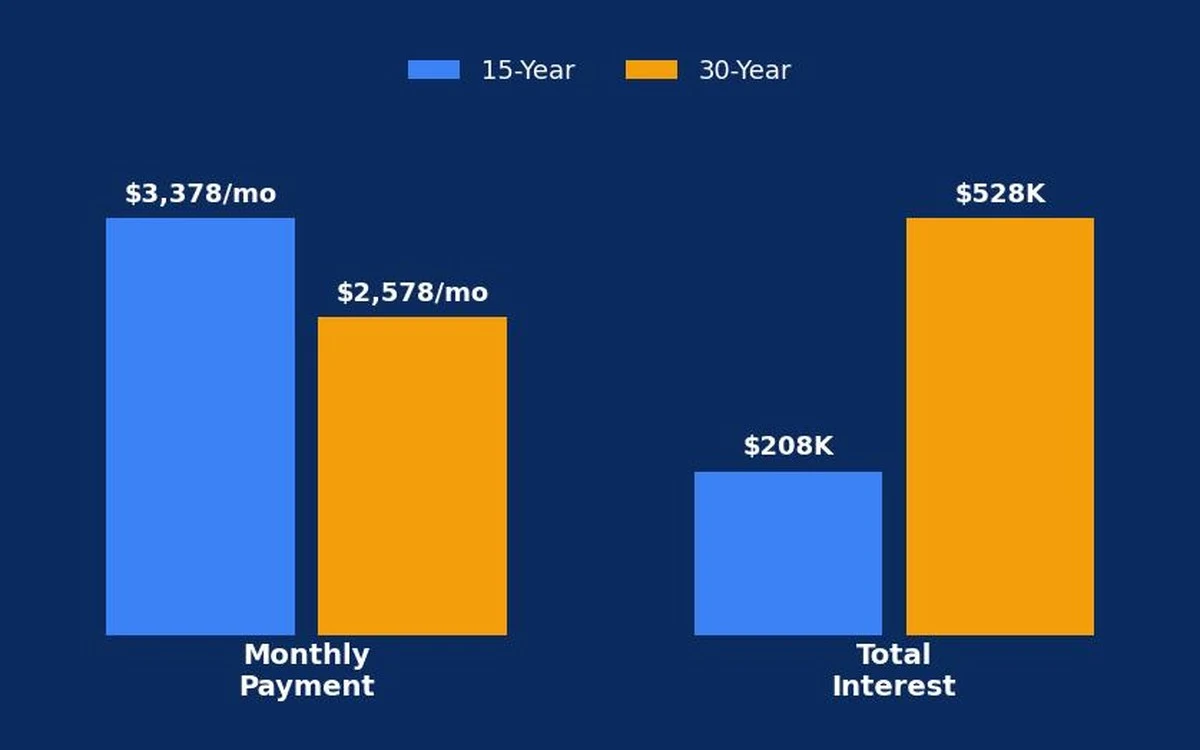
Here's what a $400,000 loan looks like under each term, using the Freddie Mac average rates above:
| Metric | 15-Year @ 6.01% | 30-Year @ 6.69% |
|---|---|---|
| Monthly payment (P&I) | $3,378 | $2,578 |
| Total interest paid | $207,966 | $528,245 |
| Total paid over loan life | $607,966 | $928,245 |
| Time to build equity | Much faster | Slower, more gradual |
Why the 15-Year Rate Is Lower
Lenders consistently price 15-year loans below 30-year loans, and the gap has held around 0.6–0.75 percentage points through 2026. Two reasons:
- Less risk for the lender: A shorter loan term means the lender's money is repaid faster, reducing exposure to interest rate and default risk over time
- Faster principal paydown: More of each payment goes toward principal rather than interest from day one, which lowers the lender's risk further
Monthly Payment by Loan Amount
Here's how the monthly principal & interest payment compares across common loan amounts at current 2026 rates:
| Loan Amount | 15-Year @ 6.01% | 30-Year @ 6.69% | Monthly Difference |
|---|---|---|---|
| $250,000 | $2,111 | $1,612 | +$499 |
| $350,000 | $2,955 | $2,256 | +$699 |
| $450,000 | $3,800 | $2,901 | +$899 |
| $550,000 | $4,644 | $3,545 | +$1,099 |
When a 15-Year Mortgage Makes Sense
- You can comfortably afford the higher payment without straining your monthly budget or emergency fund
- You want to be mortgage-free before retirement — a 15-year loan taken at 50 is paid off by 65
- You've maxed out higher-return savings like employer 401(k) matching and other tax-advantaged accounts first
- You value guaranteed savings — paying off debt at 6.01% is a guaranteed return, unlike market investments
When a 30-Year Mortgage Makes Sense
- You want lower, more flexible monthly payments — useful during unpredictable income years or early career stages
- You'd rather invest the difference: historically, stock market returns have often outpaced the 6.69% mortgage rate over long periods, though this isn't guaranteed
- You want a larger emergency cushion — lower fixed payments mean more monthly breathing room
- You can prepay when convenient: most 30-year loans allow extra principal payments any time, giving you 15-year-like flexibility without the obligation
Compare Both Loan Terms Instantly
Enter your loan amount and see the exact monthly payment and total interest for 15-year vs 30-year side by side.
Use Free Mortgage Calculator →A Third Option: 20-Year Mortgages
Less commonly advertised but worth asking about, 20-year fixed mortgages split the difference — a faster payoff than 30 years, a lower monthly payment than 15 years, and typically a rate that lands between the two. Not every lender offers this term by default, but most will originate one on request.
Key Takeaways
- As of August 2026, the 15-year rate (6.01%) runs about 0.6–0.7 points below the 30-year rate (6.69%)
- On a $400,000 loan, the 15-year option costs roughly $799 more per month but saves about $320,300 in total interest
- Choose 15-year if you can comfortably handle the higher payment and want to be debt-free faster
- Choose 30-year if you want payment flexibility, plan to invest the difference, or need a larger monthly safety margin
- Consider a 30-year loan with voluntary extra payments as a flexible middle ground
- Always compare at least 3 lenders — rates for the same loan term can vary meaningfully between lenders
Rate data referenced: Freddie Mac Primary Mortgage Market Survey (PMMS), August 6, 2026; Bankrate national lender survey, August 7, 2026. Monthly payment and interest figures calculated using standard amortization formulas at the stated rates.
This article is for informational purposes only and does not constitute financial or mortgage advice. Mortgage rates change daily and vary by lender, credit profile, and loan type. Always get personalized quotes from multiple lenders and consult a licensed mortgage professional before deciding.